
Insights : sugar asset resilience
Sugar asset resilience : in sugar industry, the past matters
Sugar asset resilience is rooted in the long lifespan of industrial equipment and the gradual evolution of sugar production technologies. In a capital-intensive industry, factories can remain productive for decades, making asset durability a defining feature of long-term investment in the sugar sector.
By Patrick Chatenay - Last update : 12/10/2026
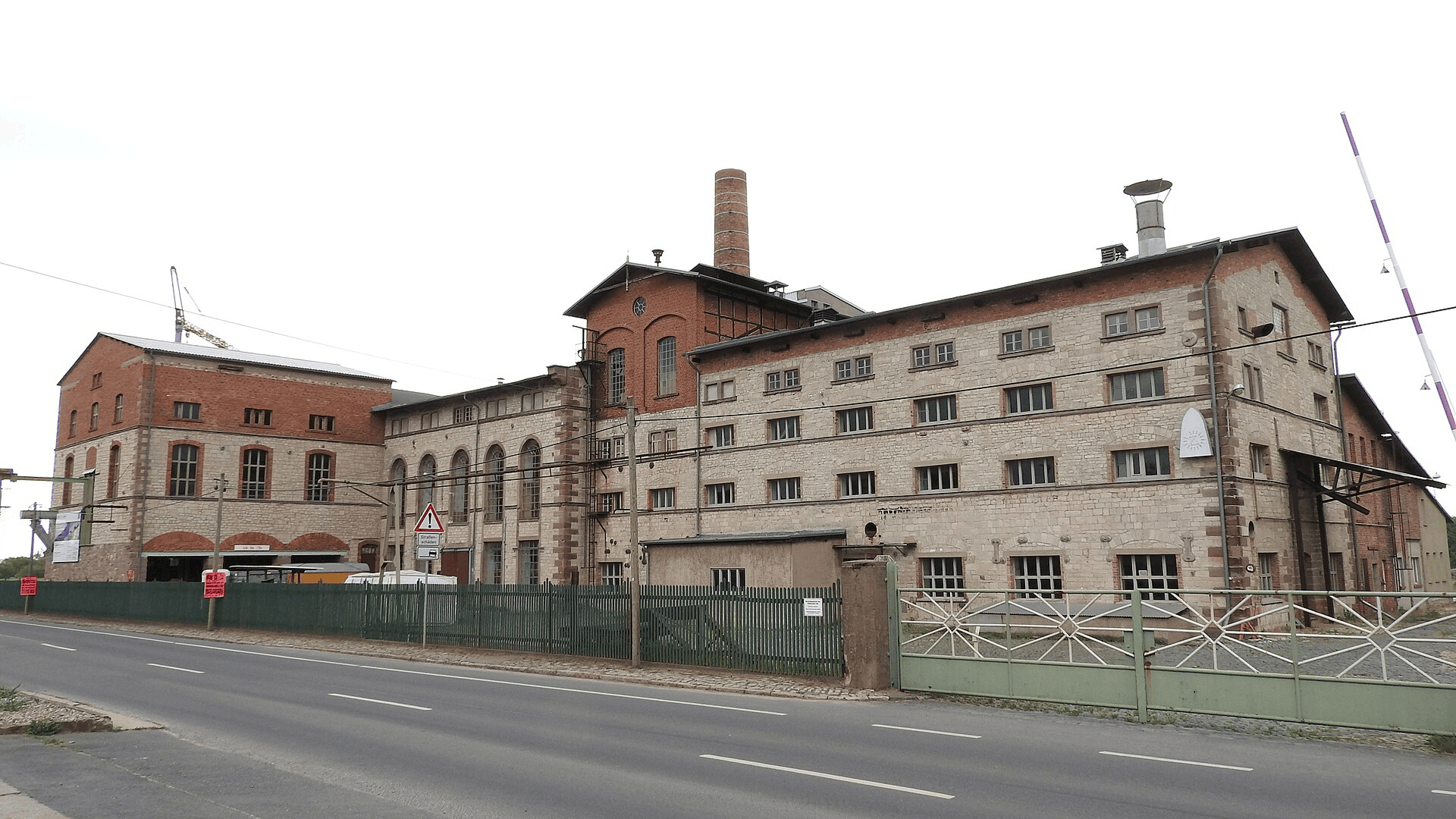
The historic Sugar factory in Oldisleben, Germany (photographed in may 2018). Photo: Aschroet / Wikimedia Commons (CC0 1.0).
contents
The Long-Term Nature of Sugar Industry Assets
Sugar is a capital-intensive industry in which technology evolves slowly and major industrial assets are sole-purpose. Given these characteristics, the viscosity of investment in the industry is high – financial commitment is necessarily for the long run – and depreciated assets continue to serve well beyond their accounting amortization periods.
Although field and factory productivity has much improved over the past century, the processes and technologies used to extract sugar from sugarcane or beet themselves have changed little. Indeed, a mill uses a lot of energy to move the feedstock, to wash it, to crush or cut it, wet it, dry it, evaporate and clean the juice, and to clean, dry and store the sugar crystals. In this respect, the basic bits of equipment involved – the trucks, the boilers, the conveyor belts, the pipes, the pumps, the pans, the turbines and the centrifugal machines are similar to those which would have been used a century ago.
Incremental innovation and industrial productivity
If productivity has risen over time, it is through a long list of incremental advances often imported from other industries. For example, high-pressure boilers come to mind; these have not only brought increased energy efficiency.Furthermore, they have enabled mills to generate surplus electricity and sell it to the grid. In addition, as transport costs have declined, mill size has increased to seize factory economies of scale.
Oldisleben: A Case Study in Asset Longevity
The staying power of sugar industry assets is nicely illustrated by the Oldisleben sugar factory, which was located in the Saxony-Anhalt region of Germany. Built in 1873, the factory processed its last sugar beet in 1989, the year the Iron Curtain fell. According to the story, its machines were already so old in 1945 that the Soviet authorities decided against hauling them east as war-booty. For instance, I remember a steam engine of 1886. Another major piece of equipment was dated 1879. Remarkably, all were in perfect working order, as attested by the 1989 campaign. In other words, sugar factories do not necessarily age quickly once built.
At Oldisleben, the last remaining industrial stack made with bricks is visible from quite a distance and, as you get closer, an amazing factory emerges in which sugar was extracted from beets for over 100 years. Finally closed in 1990, the plant was considered a museum piece in the final decades of operations, and was officially designated a heritage property in 1989.
Historic building materials dating back to 1872, such as shell-bearing limestone, cast iron pillars, huge steam turbines and impressive boilers, just to name a few, remain largely intact and invite visitors to see for themselves how a sugar factory operated in the 19th and 20th centuries. Today, Südzucker AG, the largest European sugar producer, owns this historic site. The company is conscious of its responsibility and takes pains to maintain this unique engineering monument. Indeed, when visiting the site today, one gets the impression that the next beet campaign will be able to start right on schedule.
An investment in the sugar industry is a long term investment.

Written by
Patrick Chatenay
Founder of ProSunergy - In the sugar industry since 1985


Continue reading
Other insights
Reference analysis
Investing in sugar
A short intro
Reference analysis
Does the EU know it is killing its sugar industry ?
How EU sugar policy is threatening the future of Europe's domestic sugar industry
Notes
Trades, subsidies et al.
In the sugar industry, the past matters
Continue reading
Other insights
Reference analysis
Does the EU know it is killing its sugar industry
How EU sugar policy is threatening the future of Europe's domestic sugar industry
Notes
Trades, subsidies et al.
Latest : about free trade
Discuss a project with ProSunergy
A question about the sugar industry, an investment or a strategic issue ? Write us